
Health Insurance Costs Rise Again
Is Your Practice Ready for the Biggest Health Insurance Increase in 20 Years?
If your last health plan renewal stung, the 2027 renewal may hurt even more. Recent articles, including this WSJ article, warn that employers could face their largest health insurance cost increase in at least two decades in 2027. It is worth planning for now rather than waiting until renewal time.
The numbers behind the headline
Your team members are already paying more for their health care in 2026. Benefits consultancy Aon estimates that Americans with workplace coverage will spend an average of $5,297 on healthcare this year, up $388 from 2025. That total combines what comes out of each paycheck for premiums with what people pay at the doctor's office and pharmacy.
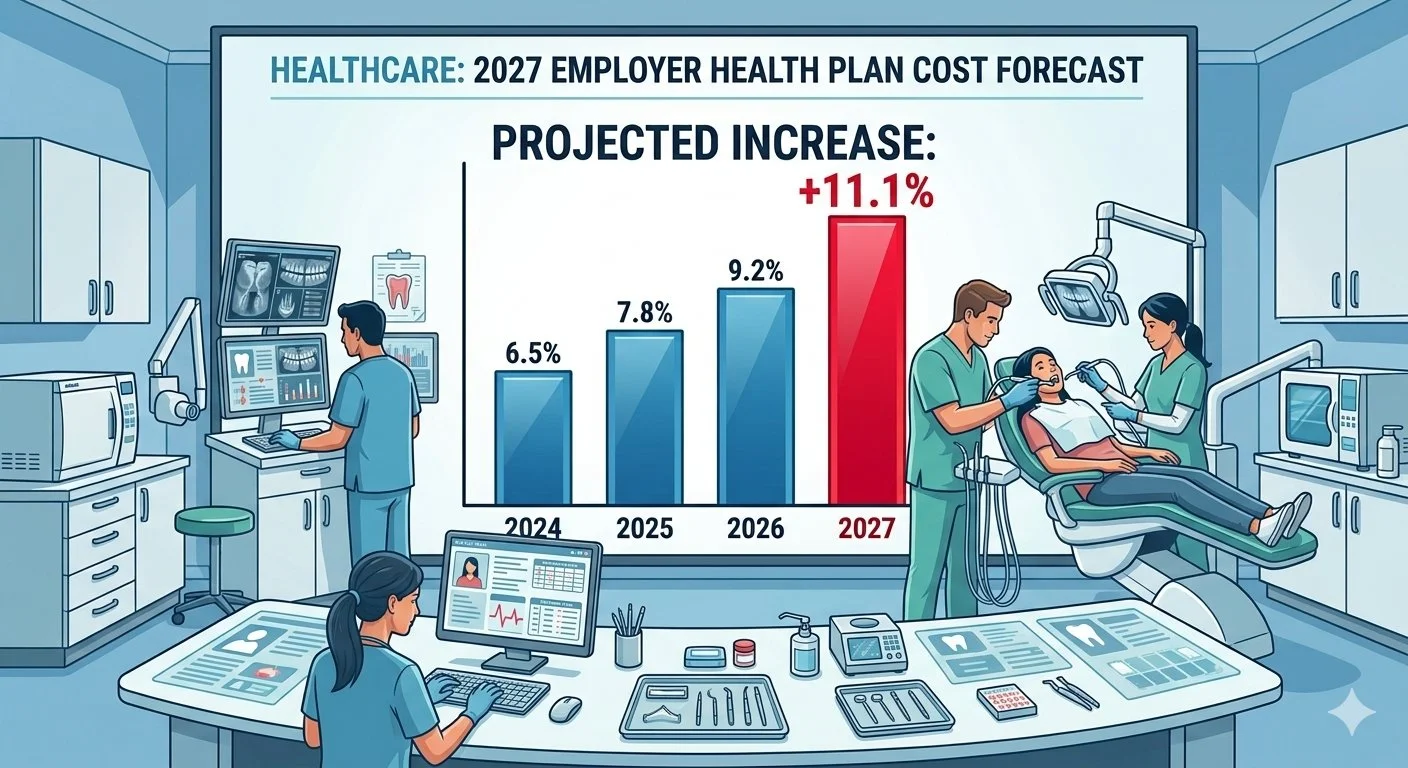
Next year looks even steeper with health plan costs predicted to increase by 11.1% in 2027, the sharpest jump in more than 20 years and the fifth straight year of accelerating increases. Benefits consultants warn that with the slowing economy and inflationary wage pressures, these benefit increases are "utterly unsustainable."
Because your team members typically pay a share of the premium, their costs tend to rise at roughly the same pace as your practice’s costs. When combined with out-of-pocket spending on deductibles, copays, coinsurance, and uncovered care their healthcare spending has easily outpacing their income growth.
What's driving the increases
Several forces are at work:
High-cost drugs, especially GLP-1s. The popular diabetes and weight-loss medications are among the biggest drivers.
Cancer Treatment. New therapies can be life-changing, but many carry very high price tags.
Hospital Pricing. Hospitals have been winning price increases and are increasingly using AI tools to maximize their billing.
More Utilization. Employees are simply using more medical services and more expensive medications across a range of conditions.
Profit Motives. Many of the largest insurance companies are publicly traded companies and need to maintain healthy profit margins to attract investors.
Renewals Should No Longer Be Automatic
At larger companies, health benefits decisions have moved beyond the HR department. When a benefit cost grows this fast, it becomes a strategic business issue.
For your practice, the stakes can be even more direct. To maintain a healthy operating profit margin, your practice needs to keep total team costs, including health benefits to 25% of collections. To maintain that percentage, you can:
increase your collections, either by raising your fees in a fee-for-service practice or by doing more work in a PPO-dependent practice.
shop around for adequate coverage for your team that fits within your practice budget.
What to do now
There's no easy, single fix, but planning ahead gives you far more options than reacting to a last-minute renewal. Here are some steps you can take:
Start early. Understand your own health plan needs and those of your team before renewal so you can evaluate alternatives.
Develop a GLP-1 strategy. Decide deliberately how your plan will cover these drugs, including clinical criteria, lifestyle program requirements, or pharmacy benefit manager options, rather than letting the trend decide for you.
Review your pharmacy benefits contract. With drug spending a leading cost driver, contract terms, rebates, and transparency matter more than ever.
Rethink plan design, not just cost-sharing. Raising deductibles alone shifts the burden on to team members but will also reduce premium costs.
Communicate clearly with your team. Explain why costs are rising and how to use their benefits wisely.
Look at total compensation. Rising benefit costs can eat into your team cost budgets. Balancing wages and benefits thoughtfully helps you stay competitive for talent.