
The Financial Safety Net
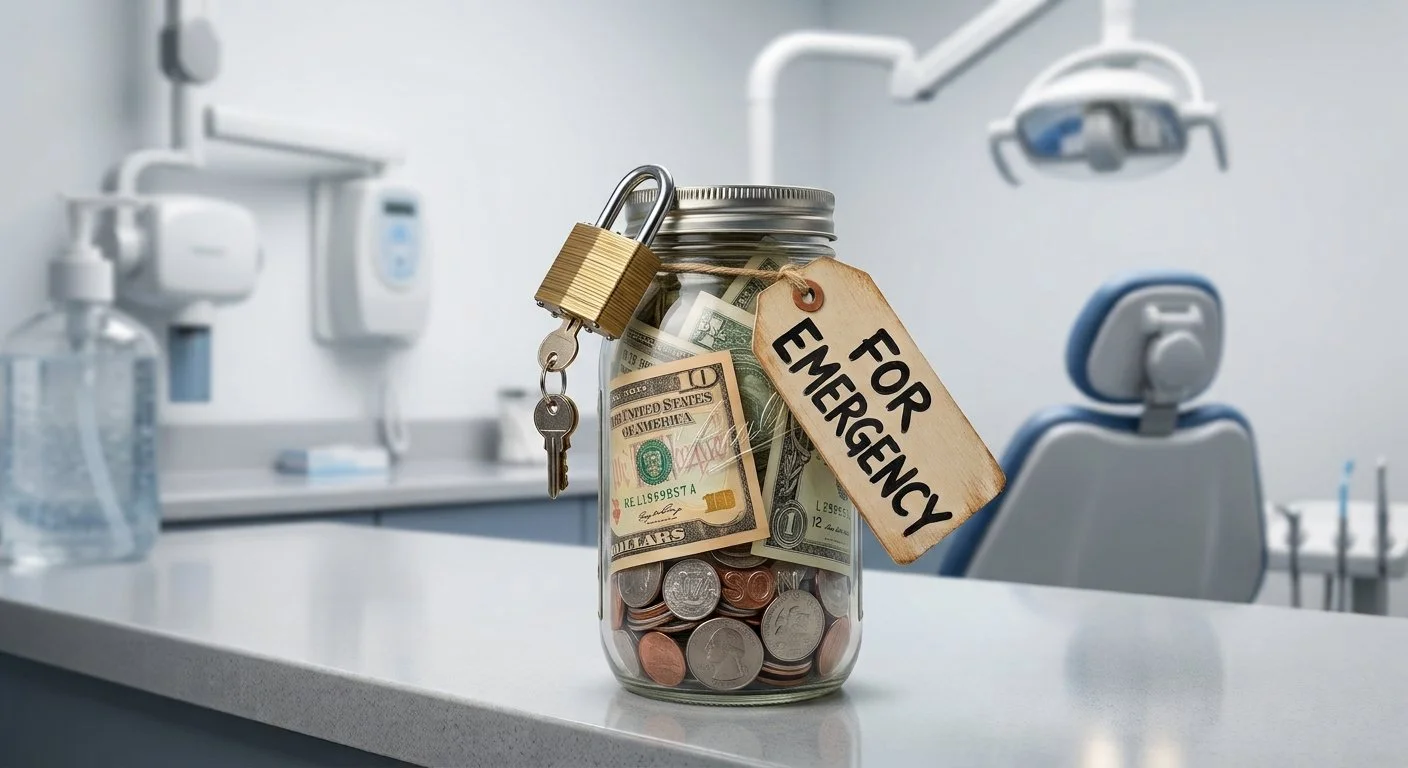
The Emergency Fund
Most people don't even have an emergency fund. Recent studies reveal that 22% of U.S. adults said they had nothing saved for emergencies over $1,000 and only 18% of Americans have enough saved to cover one year of basic living expenses.
As a practice owner, you will need two emergency funds. When a CBCT unit fails, a key hygienist leaves, or an insurance carrier slows payments, the practice often turns to the owner to cover the gap. If the owner's personal savings are thin, one problem at the practice quickly becomes two problems at home. Building both a personal and practice reserve breaks that dependency chain.
How much your practice needs
A common target for a practice reserve is two to three months of fixed operating costs. That is the money that goes out the door whether or not patients are in the chair. Start by adding up a typical month of:
Rent or mortgage on the practice building
Staff payroll, payroll taxes and benefits
Practice loan and equipment lease payments
Malpractice, property and other business insurance
Software, IT, lab minimums and other recurring contracts
Utilities and essential supplies
Use the one-month total as your starting point and multiply by three for a full reserve. If fixed costs run $80,000 a month, you are aiming for $240,000.
Lean toward the higher end if your practice has a large insurance mix, a single provider, seasonal swings, or older major equipment. A newer practice still ramping up, or one carrying acquisition debt, also benefits from a bigger cushion. A line of credit is a useful backstop, but it is borrowed money, not a reserve.
How much your household needs
The general recommendation in personal financial planning is typically six to eight months of living expenses. For a practice owner whose pay depends on how the practice is doing, the upper end of that range is the safer choice.
To set your number, total your essential monthly costs: housing, utilities, groceries, transportation, insurance premiums, and required debt payments such as student loans. Then multiply. A household with $12,000 in monthly essentials would target $72,000 to $96,000.
Building both funds, step by step
The same steps work for the practice and the household. Run them side by side rather than finishing one before starting the other.
Set a first milestone. Six months can feel out of reach, so start with one month of practice overhead and one month of household essentials. Hitting an early target builds momentum.
Know your numbers. Pull fixed costs from your practice P&L and essentials from your personal budget.
Automate it. Set a fixed transfer into each reserve on a schedule, such as at the end of each month for the practice and each owner draw for the household. Saving that happens without a decision is saving that happens.
Send one-time windfalls straight to the fund. Tax refunds, a strong collections month, a bonus, or proceeds from selling retired equipment can jump-start a reserve.
Trim small leaks. Review recurring charges at the practice and at home. Unused software seats, duplicate subscriptions and lapsed vendor contracts add up.
Rebuild after you use it. If you draw on either fund, restart regular contributions right away until it is back to target.
When savings fall short
Don’t panic if your emergency fund isn’t where you would like it to be. Here are four tips to get you headed in the right direction.
Take willpower out of it. Pay the personal emergency fund first with automatic transfers on payday. At the practice, treat the reserve contribution like any other fixed bill.
Give each fund a clear job. Name the accounts, such as "Practice Operating Reserve" and "Family Safety Net," and track progress against smaller milestones.
Look for small spending shifts. A quick review of spending usually turns up a few costs you can redirect without giving up what matters.
Park the money where it can earn. Keep reserves in safe, accessible accounts such as high-yield savings so they grow while staying available.
Where to keep the money
Keep each reserve in its own account, separate from the practice operating account and your personal checking. High-yield savings and money market accounts keep the cash easy to reach while still earning interest. The separation matters because money that sits next to everyday spending tends to get spent.
Start this month
You don't need to fully fund either reserve this year. You need a goal amount for each fund, a separate account, and an automatic transfer. Pick a first milestone for the practice and one for your household, set up the transfers, and revisit the targets each quarter as your overhead and family needs change.